Silence as a New Value in Large Urban Parks
In large cities, silence has become one of the rarest forms of comfort. Urban life is defined by movement, signals, engines, conversations, construction, alerts, and the constant pressure of visible activity. Even when a city is exciting, it is rarely quiet. That is why large urban parks are increasingly valued not only for beauty, greenery, or recreation, but for something less obvious and more difficult to protect: the experience of silence.
This silence is not absolute. A city park is never truly separated from the world around it. There are still footsteps, distant traffic, dogs, bicycles, children, birds, wind, and the occasional hum of urban life filtering through the trees. But what makes park silence so meaningful is precisely this difference from total noise. It offers a softened acoustic space, a place where the city’s pressure loosens and the senses begin to reorganize themselves. In that sense, silence in a large urban park is not the absence of sound. It is the absence of relentless demand.
For a long time, public conversation about city parks focused on visible functions. Parks were described as places for exercise, fresh air, family leisure, tourism, community gathering, and environmental balance. All of these roles still matter. Yet modern urban life has made another function more important than before. Parks now serve as acoustic refuge. They give people something that many indoor spaces no longer reliably offer: a chance to hear less, process less, and exist for a while without being constantly addressed by the city.
This change is closely connected to the way contemporary life is lived. People spend much of the day in overstimulating environments, whether physical or digital. Offices are full of conversation and devices. Transport systems are crowded with announcements and mechanical noise. Streets are dense with engines and movement. Even private life is filled with headphones, streams, alerts, and background media. Many people now move through the day with almost no real gap between one form of input and the next. In such a world, silence begins to feel less like emptiness and more like relief.
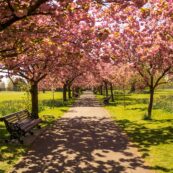
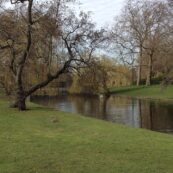
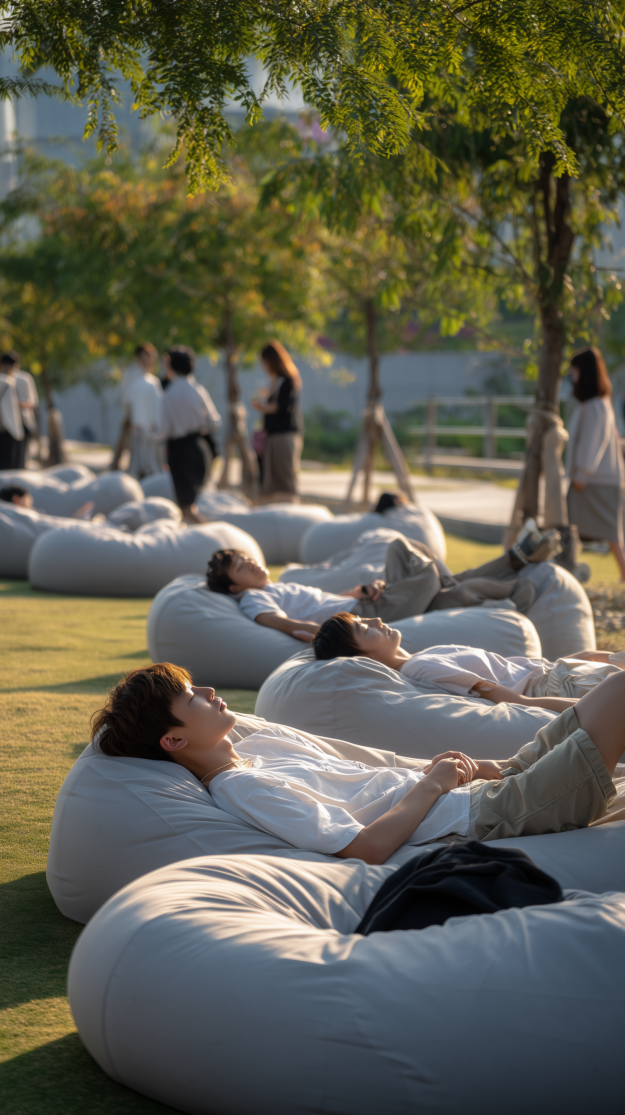
Large urban parks offer a version of that relief because they create distance without requiring departure. Not everyone can leave the city for countryside, coastline, or woodland. But a large park can provide a temporary shift in sensory conditions inside the urban environment itself. The trees absorb sound. Open lawns widen perception. Water slows the atmosphere. Paths draw people away from main roads and commercial fronts. What emerges is not wilderness, but an urban form of quiet that feels reachable, democratic, and immediate.
This is one reason silence has become such a valuable quality in big parks. It is not only restorative. It is accessible. A person does not need to book a retreat or plan a journey. They can step into a green space and feel, sometimes within minutes, that the texture of the day has changed. The mind stops bracing itself in the same way. Thoughts begin to move differently. Time may seem slower, but in a welcome sense. Silence becomes part of how the park gives the city back to the person in a more livable form.
There is also an emotional dimension to this. Silence in a large park allows a person to feel less managed. Much of city life is structured by instruction, transaction, and direction. Streets tell people where to go. Devices tell them what needs attention. Work environments tell them what must be answered. Commercial spaces are designed to keep them visually and mentally active. By contrast, the quieter zones of a park often ask very little. A bench, a path, a tree line, or a pond does not impose an agenda. This lack of demand can feel surprisingly rare. It creates space not only for rest, but for inwardness.
That inwardness is one reason park silence matters more now than it may have in earlier eras. Large urban parks are not only places to move through. They are places where people can recover a form of mental privacy. Even when surrounded by others, they may feel less observed and less hurried. The city becomes present at a distance rather than pressing directly against them. In this way, silence changes the meaning of the park from a simple leisure space into a psychological resource.
At the same time, silence in urban parks should not be romanticized as something passive or decorative. It is increasingly a matter of design, planning, and protection. Quiet does not happen automatically in a city. It depends on layout, planting density, pathways, buffer zones, water features, maintenance choices, and the balance between recreation and retreat. A park that is entirely programmed for events, high footfall, and constant activation may remain attractive, but it can lose the quiet depth that gives it emotional value. The modern city often celebrates activity, yet large parks remind us that public space also needs room for low intensity, pause, and unstructured presence.
This creates an important tension in how urban parks are imagined. Cities want parks to be inclusive, lively, and useful. They want them to host sport, culture, walking, meeting, and tourism. But if every part of a park becomes optimized for visible use, something essential may disappear. The quieter corners, slower paths, and acoustically softer zones are not leftovers. They are one of the reasons parks continue to matter. Silence is not a lack of value within the park. It is one of its highest values.
The renewed importance of silence also changes how people experience nature in cities. In a loud environment, greenery can still be beautiful, but beauty alone does not always create restoration. Silence allows nature to be felt more fully. Birds become noticeable. Wind in leaves becomes distinct. Water becomes more than background scenery. The person is not only looking at the park. They are entering a different sensory order within it. This is often where the deepest attachment to a city park begins: not in spectacle, but in the feeling that one’s nervous system has shifted.
In many ways, this makes silence one of the most modern values a large urban park can offer. It responds directly to a culture shaped by acceleration, overstimulation, and constant access. People do not seek quiet in parks merely because they dislike cities. They seek it because quiet helps make city life sustainable. A park’s silence does not reject urban living. It supports it by offering intervals of release inside it.
That is why silence in large urban parks should be taken seriously. It is not just a pleasant side effect of trees and distance. It is part of the park’s public function. In a city where attention is repeatedly pulled outward, silence offers the chance to gather it back. In a daily rhythm built around speed and reaction, it creates a pocket of slower perception. And in an environment where almost every space is designed to stimulate, direct, or monetize human presence, a quiet park remains one of the few places where simply being there is enough.
Silence has become a new value in large urban parks because it answers one of the deepest unmet needs of contemporary city life. It gives people relief without removing them from the city, privacy without isolation, and calm without demanding explanation. In the end, that may be one of the most important reasons parks still matter so much. They do not only give cities green space. They give urban life a way to breathe.